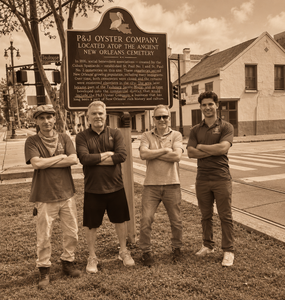
The story of P&J begins many thousands of miles from New Orleans in Ustica, Italy, Sicily and Austria along the coasts of the Adriatic and Mediterranean Seas.
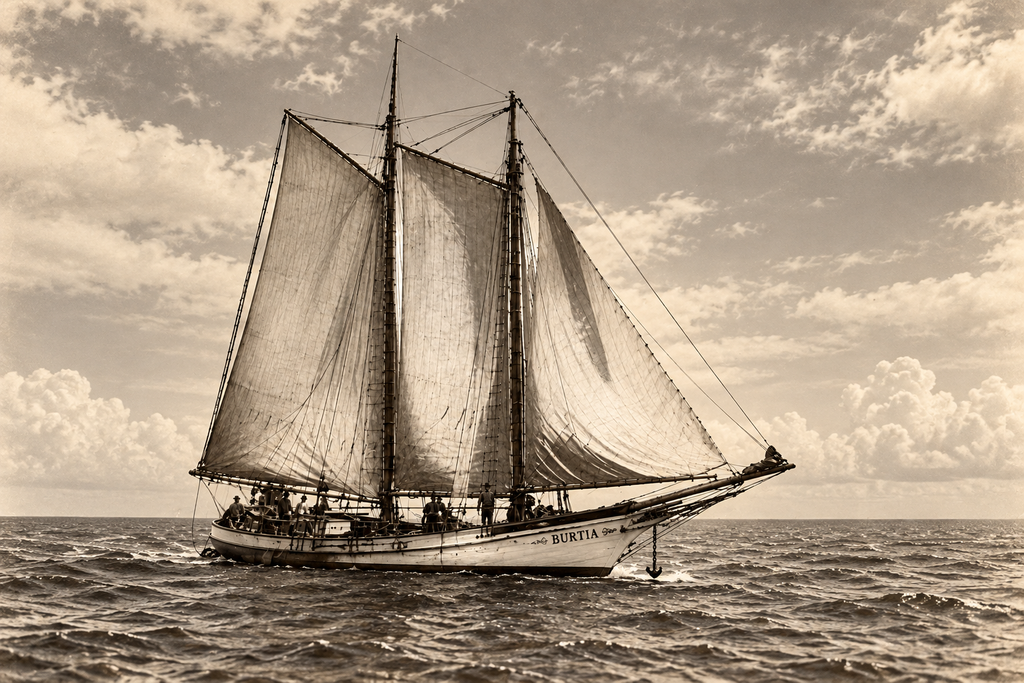
Back in 1841, our great-great grandfather Agostino, (Gus), Mazzola began his journey to New Orleans. He emigrated from the small Italian island of Ustica, that is located between the mainland of Italy and Sicily. As soon as his son Caledonia, (Calcy), was old enough, he became Gus’ first mate on their sailing schooner Burtia in which they brought passengers and goods such as bananas, other fruits and vegetables from Cuba, then Honduras, and then to the mouth of the Mississippi river in Plaquemines Parish. They later shortened their route from Pilot Town and Olga transporting passengers, oysters, seafoods and the local fruits to the “Picayune Tier” at the French Market in New Orleans. On their return trips, they would bring supplies back to the farmers, fisherman, and boat captains who lived down River at Pilot Town and Olga. Later, when Gus and Calcy made enough money to start their businesses in New Orleans, they moved to the City for good in 1857. Soon after Gus sent for our Great Great Grandmother, Giovanina, (Jenny), Lauricella Mazzola and Calcy’s wife Victoria and their children to join them in New Orleans to make a home that they could all live.
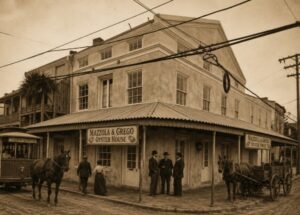
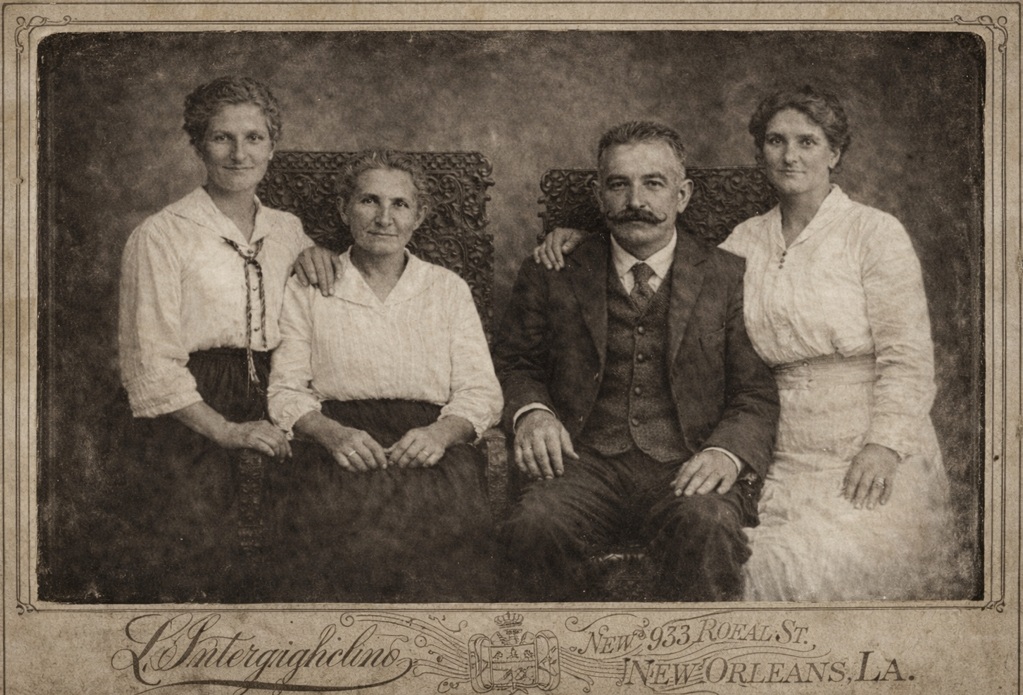
After settling into their successful businesses in New Orleans, Gus sent for his daughters, Francesca, Josephine, Maria, Diodora, and Angelina. All of the daughters married men who owned oyster shops in different parts of New Orleans. In 1868 Gus went into business with Captain Salvador Grego who was the father-in-law of two of his daughters. The oyster shucking and distribution house was on the corner of Tchoupitoulas and Euterpe Streets in the warehouse district near the oyster market on the river.
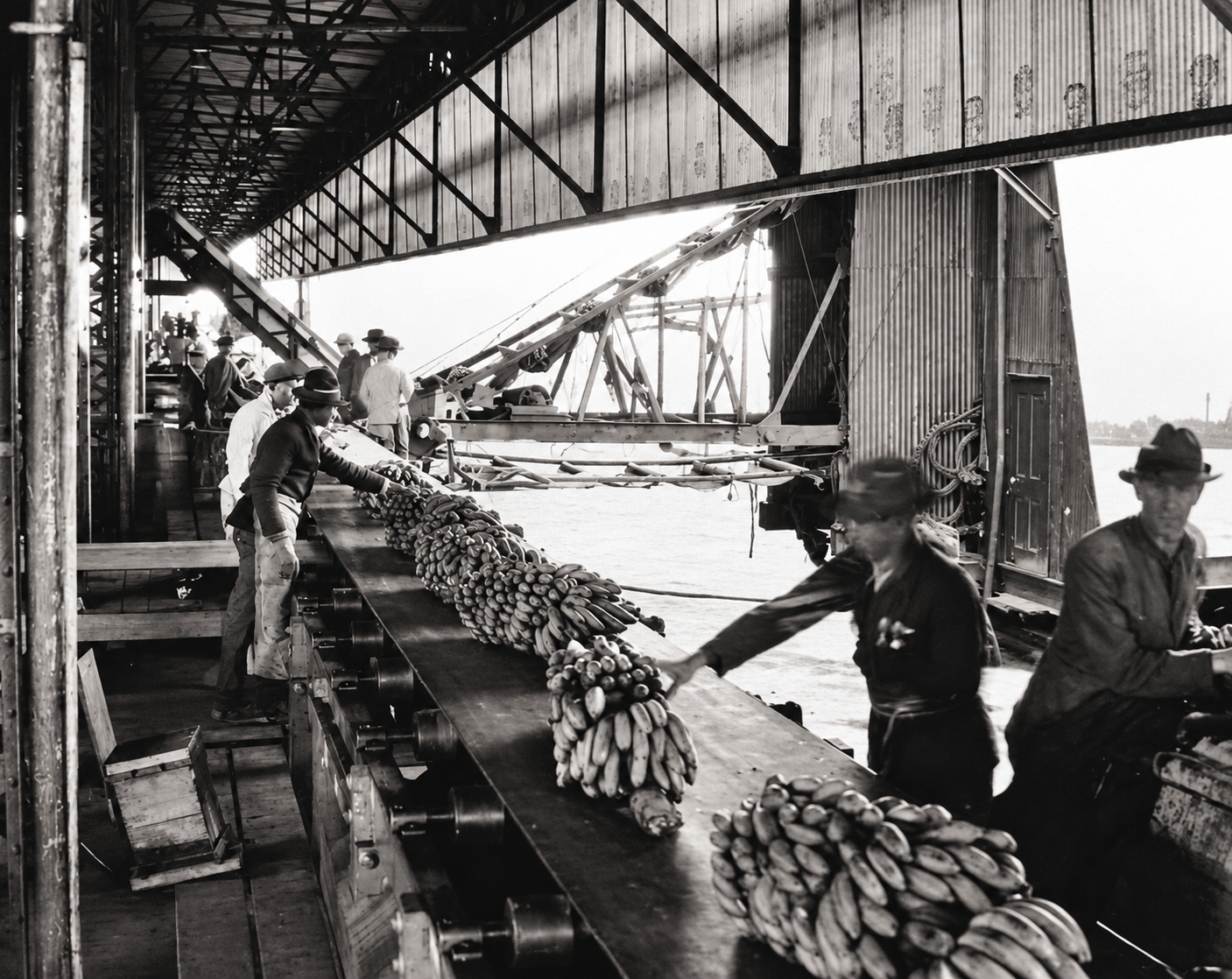
Our Great Great Francisco, (Frank) Sunseri immigrated to New Orleans in the 1850’s from Trabia, Sicily and began managing the stevedores along the wharfs of New Orleans. Frank having left his family in Trabia would travel back and forth to New Orleans until he had built his business enough to bring the rest of his family. Frank Jr. was the first to come and went to work with the Oteri Fruit Company whose main business was shipping bananas and other fruits and vegetables from Cuba, Honduras, and Central America to New Orleans. Soon thereafter, our Great-Great Grandmother Ninfa brought her children to New Orleans, Josephine, Onofrio, Terese, Giuseppe, Antonio, Michele, Agostino, Filippo, and Salvatore, all immigrants from Trabia, Sicily ready to start their new life as Americans. Salvatore took over from his father managing the stevedores along the Mississippi River and the Old Basin Canal. Within a few years he met our Great Grandmother, Mary Mazzola and they started their own family. All of the other Sunseri clan owned different types of businesses in Palermo and were able to open similar businesses in the City. Our great grandfather Salvatore took over for his father, managing the stevedores at the Ursuline Street and the Old Basin Canal lugger landing and banana wharfs. Brother Frank worked as a shipping and receiving manager for the Oteri Fruit, Standard Fruit, and then the United Fruit company. Filippo was an importer and distributor of fine wines and liquors and was located near Pilne Market on the New Basin Canal. Onofrio owned a General Store and Boarding House on Decatur and St. Philip Street. Antonio had an oyster saloon on the Carondelet Walk along the Old Basin Canal and then moved his saloon business to Poydras Street. And Michael was a lemon that had a Importing/Exporting Company and Boarding House with his brothers Salvatore and Onofrio on St. Phillip Street. Michael later went on to work in California with the Great Atlantic and Pacific Tea Company, better know as A&P Food Stores. And Giuseppe moved to Pittsburgh upon his arrival in New Orleans starting a banana and fruit wholesale business in Pittsburgh. Antonio ended up moving there with his two sisters.
The brothers business had numerous fellow Sicilians working alongside them which unloaded vessels carrying cargos that were mainly bananas from Central America as well as fruits, vegetables, and oysters. Part of their services included cleaning the vessels and preparing them for their next voyage therein the birth of the New Orleans longshoremen.
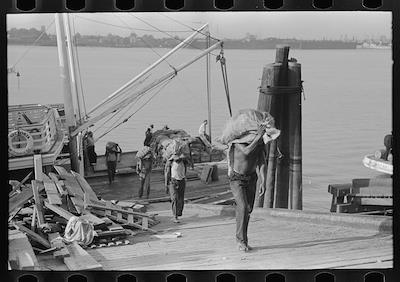
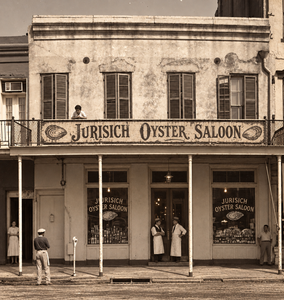
In 1870, two Jurisich brothers, Giuseppe, (John, 23), Giuseppe, (Joseph, 21), who were both farmers coming from Austria, brought a young Antonio Popich to New Orleans to start an oyster farming business in the town of Olga, at the mouth of the Mississippi River in Plaquemines Parish. They later brought their sons Giuseppe, Biaggia, Blaise, Vincent, (Vlaka), and Anthony, (Ante), in the 1880’s to grow their oyster harvest business. Giuseppe Jr. or John was married to Conchetta Federico our grandmother Elvira’s oldest sister.
By 1876 the Jurisich brothers, along with Popich, opened an oyster shucking house on Royal Street that was called Popich and Jurisich, or better known as P & J Oyster Company.
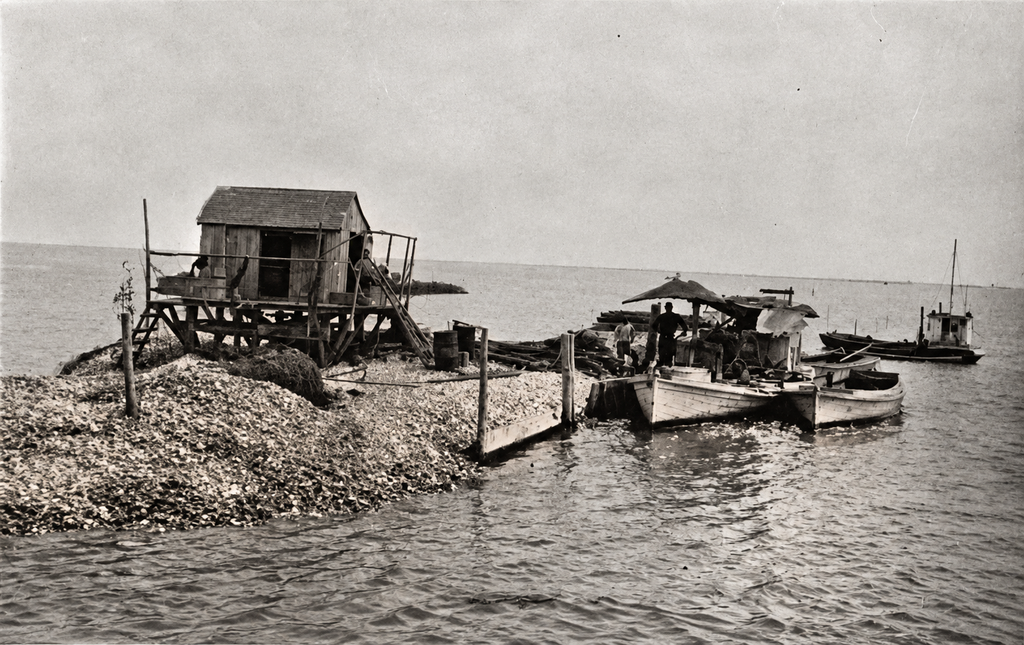
P & J Oyster Company grew by leaps and bounds through 1900 owning a fleet of oyster vessels including the schooner John Eugene, Luggers Carolina, St. Giuseppe, Fourth of July, Little City, Alabama, Admiral Techetaff and the sailing skiff Two Brothers. The company’s oyster bedding grounds included those on the Westside of the Mississippi River in Taylor Pass, Grand Bay, Little Bay, Yankee and Small Bayou, Sandy Point, Bay Jacque, Bay Coquette, Bastian Bay, Bayou Ferren, Bayou Cook, Bay Adams, Grand Bayou, and Four Bayous and on the Eastside of the Mississippi River in California Bay, American Bay, Bay Crabbe, Cox Bay, Treasure Pass, Blind Bay, Lake of Two Trees, Christmas Camp Lake, and Lake Machias.
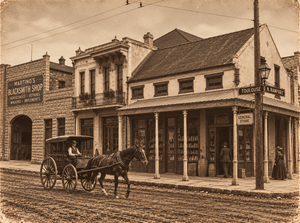
After a numerous changes in locations from the original oyster shucking house on Royal Street, and at the corner of Ursuline and Decatur Streets, P & J settled at its current location at 1039 Toulouse Street in the French Quarter. The Old Basin Canal Lugger landing was just a block away from where the oyster luggers would unload their oysters caught from the east side of the Mississippi river.
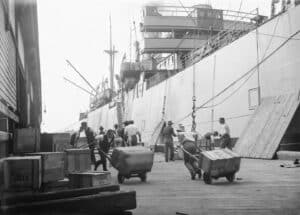
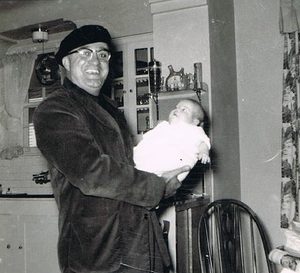
Our papa, Alfred worked for the Vacarro’s who owned Standard Fruit Company, and then Sam Zemurray, “the Banana Man,” who owned the United Fruit company on the riverfront along with his uncles. Since the bananas were unloaded adjacent to where the seafood’s and oysters were unloaded Alfred became close to the oyster farmers through his grandfather Gus Mazzola and his Jurisich uncles and cousins. So in 1921 when Alfred wanted to marry our grandmother Elvira Federico, John Jurisich’ s sister in law, he asked our great grandfather Michel Federico for her hand in marriage which he replied, “son come back to ask me when you can prove to me that you can take care of my daughter in the manner she’s accustomed.” That’s when Alfred started working for both Popich and Jurisich and the United Fruit Company
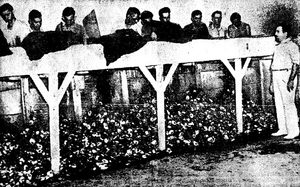
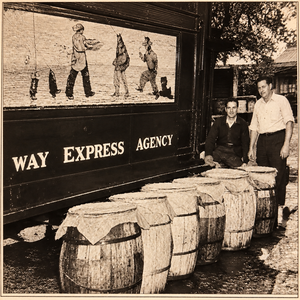
With Alfred’s customers that he came to know from the banana trade, he started selling oysters to all of them. P&J shipped on Railway Express the same company that Alfred used to distribute the bananas he sold. This was an enormous coup for P&J by increasing the oyster business tenfold selling fresh oysters, both shucked for cooking and in the shell for raw consumption to all major cities in America. P & J grew to be the largest shipper of oysters in the South. By 1937 Sunseri became an equal partner with Popich and Jurisich and quit the banana business for good.
In 1952 it was time for the next generation of Popich’s, Jurisich’ s, and Sunseri’s to take over the successful oyster farming, processing, and distribution operation. Sal Sunseri, an accountant John Jurisich, a former Marine and the Popich brothers, Joe, Spider, John, and Bonnie worked their entire life on the oyster farms living on the bayou.
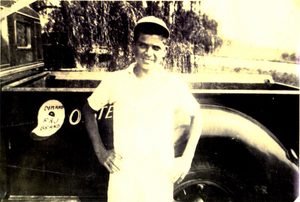
Our father Sal was working for a produce broker in southern California following his graduating from Loyola University in New Orleans when he got a call to come home to New Orleans. Our grandfather was diagnosed with cancer and he wanted our dad to learn the intricacies of the oyster business. With dad’s “gift of gab” and “man of the world” demeanor, he made his own mark on the family oyster business. Just like his great grandfather, his grandfather and his dad, our dad was friends with all the business owners as well as the leaders of the State of Louisiana and metro-New Orleans. Dad used those connections to develop the business even further than it had already been.
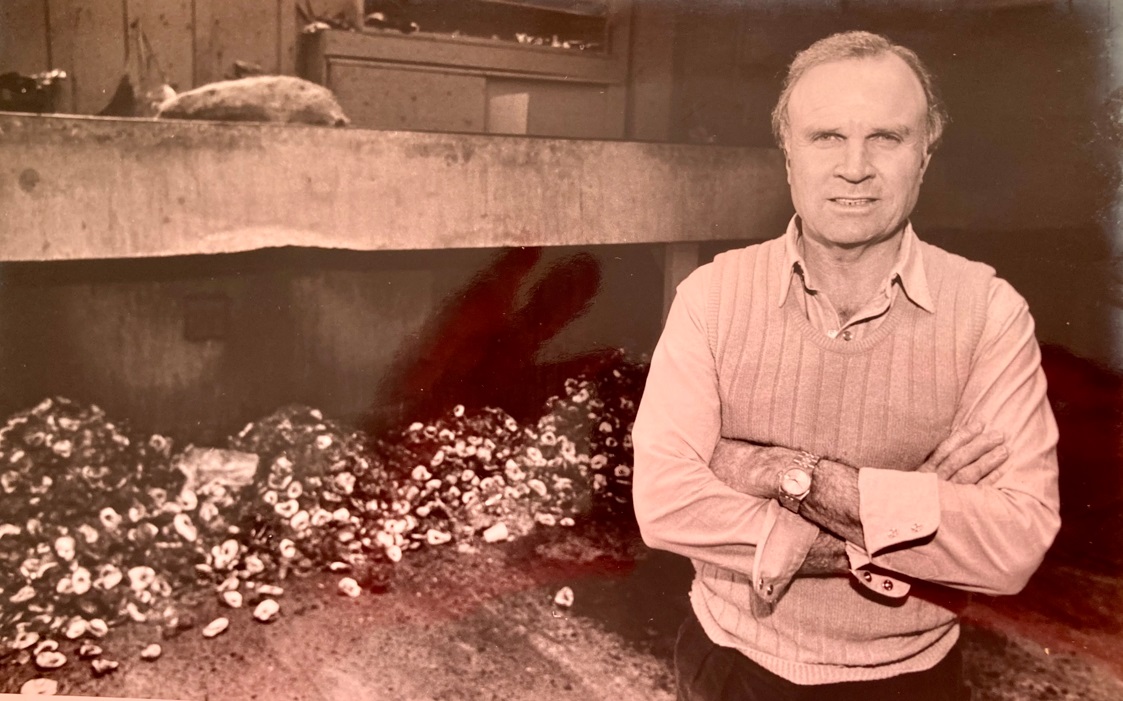
In 1961 papa died and dad became president of P&J running the business in the French Quarter while John Jurisich handled the boat and oyster leasing operations and the Popich’s handled the procurement of the oysters from our leases and oyster leaseholders that were adjacent to our leases. Also that year, Railway Express closed their doors which impacted the national shipping business significantly. Due to the change in business, in 1969 the partners chose to split the assets with the Sunseri’s keeping the shucking and distribution operations, some oyster leases, and two docks. The Popich’s and the Jurisich’s kept most of the oyster leases, two of the four docks, all four camps and all the oyster boats. At that time the Sunseri’s became the sole owners of P&J Oyster Company.
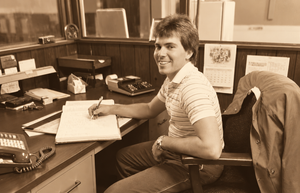
In 1980 Sal’s son Al left college to come help his father at P & J when Sal’s office manager Louis Biane had some health issues. Mr. Biane never returned to P & J and Al never continued his college career. In 1984, with the World’s Fair coming to New Orleans, Al’s brother Sal Jr. left college to come to help with the anticipated increase in business. He went back to the University of Southwestern Louisiana in 1985 to complete his degree in Mass Marketing and came back to work full-time at P & J in 1986.
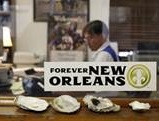
In 1989 the brothers ventured into the oyster business in southern California with some venture capitalists. Sal moved to San Diego to start the P & J Old New Orleans Seafood House while Al stayed in New Orleans shipping our cultivated oysters from Louisiana and Texas to Sal in Southern California. By year 2 the company had been a great success shipping over 80,000 lbs. of half-shell oysters per week topping 2 million dollars in sales. It was a great venture but failed to prosper long term due to some changes in market conditions and a new vision directed by the venture capitalists. Sal returned to P & J in the fall of 1992 to continue his career at the family business.
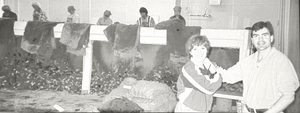
In 1991, Al and Sal’s younger sister Merri moved back to New Orleans from Florida and became the office manager and “Mother” to P & J’s family of employees. She was the first women in our family to work at P & J because we were always told that that the oyster house was not the right environment for a women to work in. She proved that not to be the case.
Later in 1991 Sal, Sr. retired to complete his tenure of 39 years at the family business.
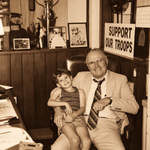
During the 1990’s Al and Sal bought the two industrial properties in the French Quarter from their grandmother Elvira as well as from the Popich’s and the Jurisich’ s completing the family’s dream of owning 100% of P & J Oyster Company and the historic buildings that houses the oldest continually operating oyster company in the United States of America.
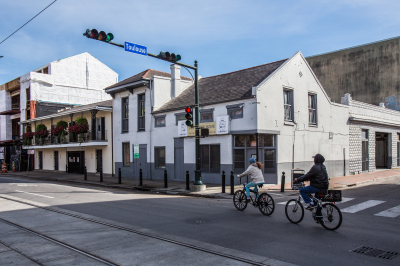

In 2002, Al’s son Blake started working at P & J during his summer vacation from high school to get a taste of the family business. He was given the most difficult jobs working in our shucked oyster packing room and delivering hundreds of minisacks of oysters each day making him learn the hard way how difficult this business is to run day in-day out. By the time Blake graduated from high school in 2004 he had 2 summers under his belt and was given an opportunity to work full time at P & J if he enrolled to be a full time student at Delgado College. Following Hurricane Katrina in August of 2005, Delgado was closed due to flooding and we needed Blake to focus on helping the family oyster business remain successful since nearly all of our drivers, floormen, and skimmer men had moved away from New Orleans. Blake has been reared in the business to be able to take over the oyster operation and run it successfully for another generation.
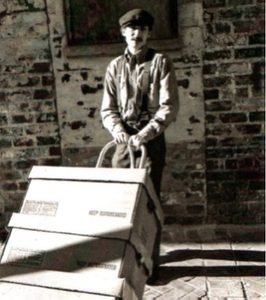
While there has been many obstacles for our family to overcome during P & J Oyster Company’s 150 year tenure in the oyster business such as 3 economic depressions, 2 World War’s, numerous catastrophic hurricanes, including Katrina and Ida, the Deepwater Horizon oil disaster, and the COVID pandemic, the Sunseri’s continue to persevere selling the finest quality cultivated oysters available on the market today. We’ve always put our customers on a pedestal believing our “Customer is King.” We make sure that our customers know their food costs and can make money off of every item we procure for them. P&J has the freshest shucked oysters that are packed like no other company. We process and pack every single gallon by hand, and is a “true” FULL volumetric gallon. While every other company selling shucked oysters sells as much water in their containers as they have oysters. Our high quality cultivated half shell oysters are hand picked for the oyster bars. P&J packs them keeping in mind that our customers must earn a profit from every oyster we sell them . Unlike our competition, our customers know that they will love our oysters while they are assured they will profit from them as well.